

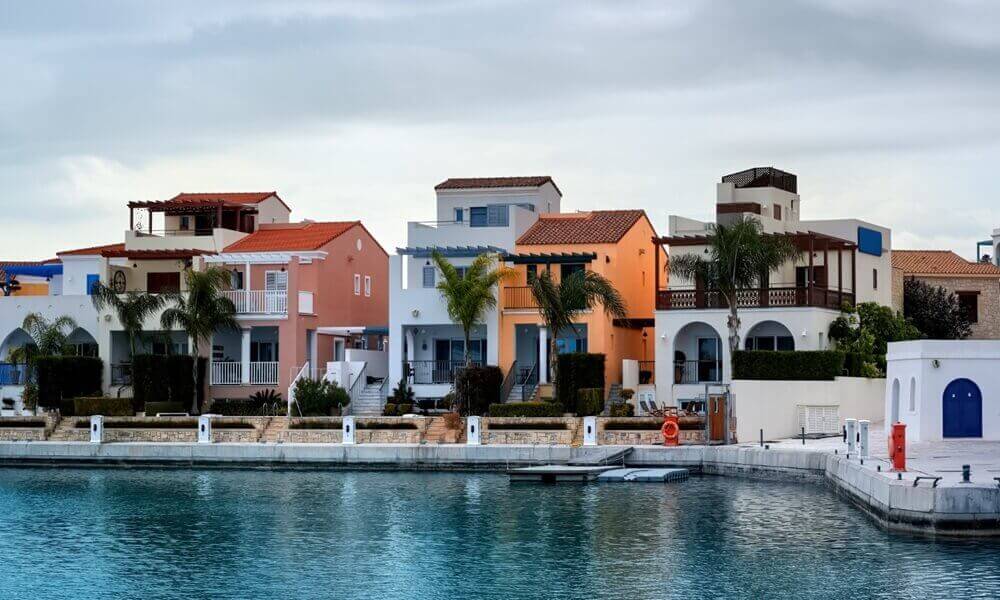
A comparison of apartments, lofts, and villas in Northern Cyprus. Find out which type of housing is best for both living and investing here.
Home » How Much Money to Live in Northern Cyprus Comfortably?

The cost of living in Northern Cyprus mainly refers to the expenses of foreigners living in the Turkish Republic of Northern Cyprus rather than locals. The analysis considers housing, food, transport, utilities, mobile/internet, health, and leisure and derives evidence-based figures from a variety of reliable sources. These standard items cover the essential costs of living in Northern Cyprus for a single person.
The typical Northern Cyprus cost of living for foreigners includes total monthly expenses such as rent, three meals per day eaten out, private medical insurance, a mobile phone account with internet, and public transport. Natural gas is treated as a discretionary expense. Figures range from about $800 for a conservative student budget without rent to over $1100 for a comfortable lifestyle. Housing usually has the greatest impact on budgeting and living expenses in Northern Cyprus, with main components such as rent, utilities, and deposits discussed in detail. Prioritizing permanent accommodation reduces costs and strengthens the case for significant savings in a cooling rental market.
The overall cost of living in Northern Cyprus can be calculated by adding together several essential budget categories—housing, food, transport, utilities, healthcare, education, and leisure. By aggregating expenses in these key areas, it is possible to arrive at a reasonable estimate for monthly and annual outgoings.
Daily costs can also be examined in ranges. Tracking past spend is an excellent way to create a realistic first estimate. Adjusting for buffers is useful and recording everything over 30 days really helps build a knowledge base for the next 30 days. Be aware that some expenses vary sharply with season, exchange rate, and political developments. A dedicated monthly budget is useless when seeking to rein in excessive spending in a specific area. These approaches help create a simple checklist for controlling and reducing costs. Some checklist items are important for everyone, while others are aimed at residents or long-stay visitors. Both groups benefit from identifying cost-construction weaknesses and considering steps to reduce wasting money.
The total monthly costs breakdown for a single person covers both essential and discretionary outgoings. Housing, groceries, utilities, transport, mobile and internet, healthcare, and leisure receive the most attention. The overall budget adds categories to deal with educational fees and/or expenses relating to kids. A conservative estimate has monthly spending well under €1,500, while €2,000 represents a moderate lifestyle.
Calculating the overall monthly cost of living in Northern Cyprus can be approached as follows: What would need to be spent each month for services similar to those typically obtained? The answer is a comprehensive summary of essential services, plus spending on other areas for a comfortable lifestyle. Some estimates come from local sources, adjusted on the assumption that expats would typically pay more. When calculating costs, it is wise to err on the side of caution, estimating on the high side for essentials and on the low side for non-essentials.
Housing costs are the largest single item in a budget for Northern Cyprus, and they take different forms depending on individual situations. Rent is usually the biggest monthly outlay, with a long-term contract typically signed by expats seeking a longer stay. A deposit equal to a month’s rent is also required. For those staying shorter periods, villas or apartments can be rented on a daily, weekly, or monthly basis, with the price often higher when demand peaks in summer. Buying property is another option, with further substantial expenditures incurred for maintenance, fees, and utilities.
There are big differences in rent and property prices depending on location. Costs are generally lower further away from the coast, or from expat communities, and unfurnished homes are cheaper. However, distance can alter the price of going out, doing the weekly shop, and travelling elsewhere, and properties closer to the coast really do have the edge in summer (although the temperature of the water isn’t the only factor!). When considering a rental, it’s a good idea to check whether the price includes services as some property owners charge extra for refuse collection, for example. Prioritizing what is most important – price, location, or quality – can yield the best deal.

A first approximation of the monthly expenses of a single person living in Northern Cyprus typically distinguishes between essentials and discretionary spending. Making average assumptions in each category produces a straightforward estimate. The key expenditure is housing, for which either rental or mortgage costs must be borne each month. Based on reports from individuals currently living in Northern Cyprus, reasonable estimates of these payments appear in section 3. Utility bills add a predictable fraction to the housing outlay, while day-to-day groceries serve as the most obvious measure of expenditure on food.
Expenditure on utilities can vary with consumption and conditions — heating in winter and air conditioning in summer can double a typical monthly bill for electricity and water. Costs are somewhat lower for telecommunications but remain worth attending to. Public transport is generally accessible, offering a cheap way to get around, but the majority of people opt to own a car. Cars are reasonably priced, but with higher maintenance costs; driving is usually regarded as more convenient than relying on buses that may have limited routes or infrequent schedules.
Estimating the costs of the essentials provides a starting point for a realistic budget. Following that path, it is simple enough to expand beyond a conservative provision of holiday-style comfort. A more generous budget is also suggested for those wishing to live relatively care-free — while still having to watch what they spend — but who are beginning to find the costs of Northern Cyprus closing in on the level of home.
Groceries and dining costs influence living in Northern Cyprus as an expat because food consumption is a significant monthly expense, especially for families and seniors. Evidence-based figures useful for budgeting are suggested. Grocery shopping at local markets, where vegetables, fruit, and dairy products are cheaper than in supermarket chains, is recommended to contain Northern Cyprus living costs 2026. Cooking meals and buying takeaways from popular Turkish Cypriot and Turkish restaurants are wise strategies for saving money.
Market prices for national and international food items differ significantly, making it prudent to budget according to season and currency exchange rates. Seasonal price changes also affect the costs of dining out and the prices of local restaurants. Imported products are subject to price increases that follow the depreciation of the Turkish lira, while local items are less sensitive. Planning meals based on which items are currently cheaper also helps control food costs.
Groceries and meals constitute a significant portion of a monthly budget in Northern Cyprus, and the price of this expense varies considerably depending on where a person shops. When cooking meals and shopping sensibly, supermarkets and local markets can provide groceries for a reasonable price, and eating locally can be surprisingly cheap. For visitors and expats, budgeting accordingly and remaining mindful of the current market conditions can help reduce the cost of food during their time in Northern Cyprus.
Whether utilities and the associated Northern Cyprus living costs 2026 are a significant expense when living in Northern Cyprus depends on a person or family’s lifestyle and consumption. Nevertheless, they should be part of any monthly budget to ensure that adequate funds are available. Utilities include electricity, water, heating, and waste. Spending on these is highly variable depending on the amount consumed. The bills below indicate average payments for electricity, water, heating, and waste. Internet service providers provide various packages, with different speeds at different prices.
As a rough guide, expect to pay €100–250 per month for a one- or two-bedroom apartment. Electricity is usually metered, and water is also charged at varying rates depending on the resident’s consumption. A couple of suppliers serve the island, but the quality of service varies with demand, especially at peak times in summer. Many properties are not centrally heated, although storage heaters are used in many homes during the short winter period. Gas oil and kerosene are also used for heating by means of oil-fired central-heating systems and portable oil-fired radiators. Both tend to be expensive during winter months but are of good quality and clean-burning. A common strategy has been to burn logs whenever possible, with convenience and cost determining which of the various power sources is used. A budgeting guideline for winter heating costs in a modern three-bedroom villa is €90–140 per month. Confirmation with utility suppliers is advised before moving in, for when deposits are to be paid, and the level of deposits, if any, that will be required.
Education and health are crucial for families with children living in Northern Cyprus. A family can spend little on education and health if they choose public schools and are healthy. The opposite applies if they opt for private schooling and medical treatment. Generally, healthcare costs have a bigger influence than education. A school-age child typically adds around £100 that must be available for private lessons in addition to the school fees, while a health budget of £200–400 should cover all normal expenses.
Public schools are free of charge and have very low operational costs. Private schools charge between £1,000 and £8,000 (excluding registration and other one-off fees) and sometimes send pupils to a Turkish school for part of the day. School uniforms, which must be worn, add to the annual expenses. Either option can usually be covered by a few weeks of a Northern Cyprus pension. These expenses apply equally to pre-school children attending kindergarten.
There are several private hospitals and clinics in North Cyprus and private health insurance is strongly recommended. Major medical expenses, such as major surgery, may cost tens of thousands at a private hospital and exceed a whole-life pension. A couple paying for long-term health insurance can expect something like £7,500 a year. Regular medical expenses can usually be covered by a health budget of £200–400 per year, or less unless unusual health problems arise. The figures below summarize these typical education and healthcare budgets for a family in Northern Cyprus.
Although costs for owning a car are significant, a vehicle can be a blessing for exploring the rest of the island. Public transport is available and relatively inexpensive, but most routes carry few services outside the summer months, and timetables are limited. Living in a fairly large town like Larnaca or Famagusta may mean some reliance on walking or, at times, a taxi to get to the location or service needed.
As expected, a car can be a big expense: purchase, registration (very reasonable), insurance, servicing, maintenance and petrol. Fuel prices fluctuate quite a lot, so it’s not easy to estimate fuel costs even for a modestly-driven vehicle. Public transport is cheap and should not be any impediment to a pretty complete exploration of the island.

Planning a monthly budget is a cornerstone of achieving your goals in Northern Cyprus, whether you aim to save, retire comfortably, or simply live within your means. Document each source of income or support, followed by a record of actual spending over a few months. Subsequently, trim your lifestyle to commence saving or build a “safety buffer” for unexpected expenses. The traditional approach to budgeting allocates fixed amounts for planned items, with any remaining income serving discretionary needs, but many people prefer tracking actual spending to see whether they’re underspending in any category. Your budgeting method is less important than maintaining a cushion for expenses that exceed expectations.
Unused spare capacity is another approach; the conventional budgeting model channels all savings into the category with largest “extras” spending—frequent visits to the tobacconist, takeaway and restaurant meals, high-priced leisure. Consider your sensitivity to price. Suppose you’re living away from town, and have little alternative should a sharemate head home for winter. Your approach then is to allocate extra just for that category. The variable exchange rate means staying alert to seasonal and local price shooting of the Euro, dollar and sterling, and avoiding auto-pilot overspending on foreign luxuries. The principle underlying an optimal travel budget is no different; budgeting is one of three key strategies for making travelling affordable.
Add your essential spending to remaining personal walking-around money—salon and massage, tobacco and alcohol (provided you don’t smoke or drink too much), books and DVDs (and all the dubious guidance one could wish for). Your total income (or income plus savings) should equal your total of budgeted and actual spending. The region’s inland cities are close to the Bafbours—such as the new Miele-owned factory outside Vasilia. What you’re budgeting for here are essentially luxury items. Budgeting is also a useful idea when living with friends and saving—whatever method of budget calculation you prefer.
Investigating the cost of living in Northern Cyprus shows that it is indeed cheaper across almost every category when compared with major Western cities. The monthly figures also bear out what many expatriates feel — that money goes a long way and is easily saved, even for those without massive incomes. Of course, this is not to say that living is “cheap” in Northern Cyprus. It is not, but for moderate budgets, trackers certainly state that they have lived well within their means, and many clear €1,500-€1,800.
Overall monthly Northern Cyprus living costs 2026 for a single person can be estimated as follows: rent of €400-€500; groceries and dining out €200-€250; utilities and internet €100; transport €50; mobile phone and internet €50; health and personal care costs €100; leisure €200-€300. Total = €1,250-€1,600. These figures are conservative; Northern Cyprus can be lived in comfortably for less. On a more moderate budget, tracks report total outgoings of €1,500-€1,900, even while being within a 10-minute drive of the beach. A few, spending very little, have even managed to live on as little as €1,000 a month.
A comparison of apartments, lofts, and villas in Northern Cyprus. Find out which type of housing is best for both living and investing here.

Learn why delivery dates, maintenance fees, and management plans matter when buying a home in Northern Cyprus. Avoid big mistakes.

Northern Cyprus investment opportunities for Israelis: property markets, legal steps, tax benefits, and high-return districts.
Hello!
