

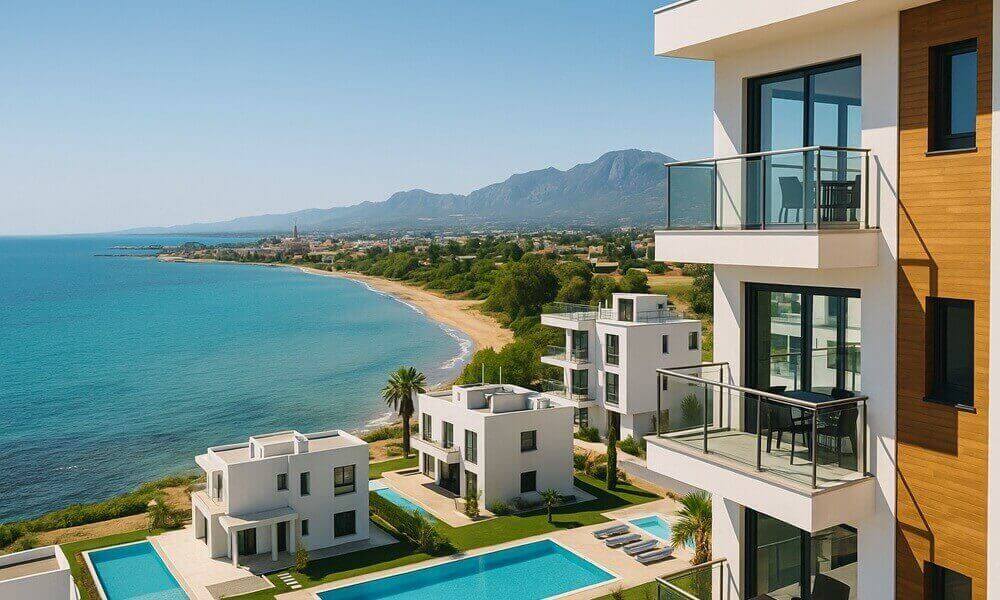
Safe, peaceful, and modern living for families in Northern Cyprus. Experience the privilege of immersing yourself in the unique natural beauty of the Mediterranean with NorthernLand projects.
Home » Why Do Israelis Buy Property in Northern Cyprus?
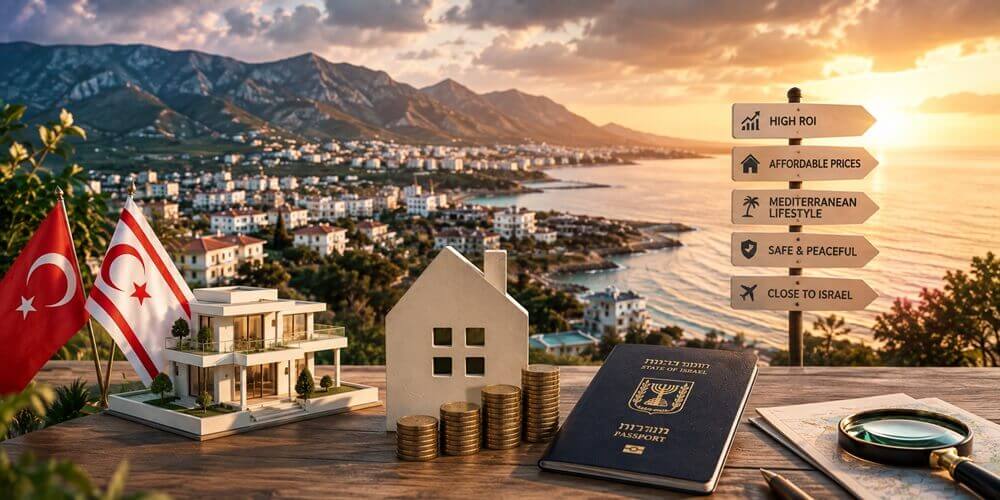
In recent months, interest in the Northern Cyprus property market has surged, with investment activity by Israeli buyers reportedly doubling compared to previous years. This trend is attributed not only to relatively low prices and promising returns on investment, but also to psychological, political, and practical factors associated with the territory’s closeness to Israel.
Alongside the generally cordial relationship between Israel and the Turkish Republic of Northern Cyprus, recent diplomatic developments have boosted the appeal of Northern Cyprus real estate for Israelis buyers and investors. The Cypriot authorities announced in early September that the citizens of Israel will now be able to obtain a visa for a period of 90 days in just a few hours, while the return of Israeli tourists depends only on the state of health and security in Israel, as the flights between the two countries do not require long detours.
An expanding array of projects, sectors, and conditions is drawing Israeli interest. The menu of potential Northern Cyprus investments for DM and shekel owners is broad. Development segments on offer are all-encompassing—residences, tourism, education, trade, and industry—with various levels of risk, time commitment, and expected yield. The most popular opportunities are villas, tourist-accommodation properties, and land designated for tourist development, complemented by returns of 7–10 percent on high-demand rental segments. Tax-exempt tourist-accommodation projects enjoy the biggest appeal. Foreign-property ownership guarantees permit stays of up to 90 days within a 180-day period. Steady improvements in infrastructure are bolstering Northern Cyprus’s attractiveness as a vacation destination, while plans for more permanent holiday homes are multiplying. Initiatives to revitalize historical-and-cultural facets and aid tourism growth are also gaining momentum.
The current wave of Northern Cyprus investment opportunities reflects heightened demand expectations. Short-term profit potential focuses on rushed purchases in regions undergoing hefty economic expansion. Mid-term profit opportunities span sectors earmarked for speedy development, such as hotels. Long-term ROI drivers mix investment horizons with tax incentives and infrastructural-technological developments bolstering attractiveness, tourism potential, and living conditions. Simplified calculations demonstrate the payback horizon for tax-exempt tourist-accommodation projects in dummy numbers.
Various features of Northern Cyprus properties make them attractive investments for Israelis. An eminently liquid property market combines a large-volume sector with significant entry-level affordability. While prices at high-end developments near the coast approach those in some main Israeli markets, properties exit these markets at manageable prices. Regulatory, financing, and foreign-relation fundamentals weigh favorably for Israelis buy property in Northern Cyprus, with deposits of around 30 percent customary and local banks willing to extend credit in both euros and sterling.
The Northern Cyprus market is known for high annual rental yields, especially for premium accommodation offerings. Israel holds several formal trade accords with Turkish Cypriots or the Turkish Republic of Northern Cyprus (TRNC) that confer obvious investment advantages. Both TRNC ministerial authorities and inbound-reception information services or agencies highlight significant tax relief upon capital Northern Cyprus property investment. Citizens of Israel and the Jewish diaspora resident in the State of Israel qualify for visa-free entry into Northern Cyprus, and the TRNC government customs agency adopted a 90-day visa-free policy for all nationalities from mid-2023.
Focused Northern Cyprus property investment covers a range of sectors and stages, with required capital outlay and projected return on investment matching investors’ chosen horizon. Countries whose citizens wish to spend extended periods in Northern Cyprus can profit from the mid- and long-term study areas of the property sector. Strong demand exists for villas, either directly for breaching the 90-day exit encounter or indirectly as accommodation for long-staying tourists. Clearly, the continued and forecast tourism-growth cycle suits investment in the tourist-accommodation market—especially medium-sized properties with bedrooms for 10 to 20 guests—and demand for such accommodation should remain strong throughout this decade and beyond.
Overseas-based tourists are more limited; accordingly, Northern Cyprus home rentals over the full calendar year generally show lower yield returns. Nevertheless, yields remain competitive with well-developed economies offering rental housing during the summer holiday months. Apart from the mortgage-interest tax deduction while owning a Northern Cyprus property investment holiday home, property investors also benefit from thoroughly enforced tax relief on rental income as long as rental activity is correctly assessed during tax declarations.

Various types of Northern Cyprus homes for sale attract Israeli interest. Foreign property buyers mainly seek condominiums and villas, but many also consider vacant land parcels. The most sought-after features include proximity to the sea and major towns – Famagusta and Kyrenia, in particular – as well as swimming pools, private yards, and finished interior furnishings. Given Israel’s warm climate, Israelis show an especially keen appetite for properties featuring built-to-order swimming pools. The hot tourist property market is also a magnet for local Kleinschmidt developers, who have established their own local division under the name S&P Northern Cyprus Properties.
Condominiums in northern Cyprus are popular partly because they tend to come at relatively low prices. The cheapest complete apartments are available. More luxurious condominiums, often with three bedrooms and expansive views from balconies, start at around $150,000. High-quality furnished apartments with swimming pools also sell for around $150,000. Israelis sometimes rent out these condominiums to tourists visiting Cyprus during the summer months. Seasonally, the rental yield can reach six percent and even more for highly attractive locations near beaches or tourist sites. Potential long-term return scenarios for investment purchases of this type point to a rewarding Northern Cyprus property investment.
Property ownership is open to non-residents in Northern Cyprus, with individual Turkish residents and companies able to purchase land. Investigating the deeds thoroughly, especially with professional assistance, can mitigate legal risks that remain.
Although the purchase process broadly follows a standard approach with offer letters, purchase agreements, deposits, and payment of the balance upon title transfer, several norms can vary. As a hence all contracts should be reviewed by a lawyer. It is common for a deposit of 10-20% of the price to be paid on signing the agreement, with the balance due on transfer. However, especially with off-plan purchases, phased payments in line with construction progress are usual.
Non-residents typically open accounts with local banks to facilitate property purchases. The main methods for transferring the title deeds are between the seller and buyer, through a sale-transfer application at the relevant land registry office, or in conjunction with a local solicitor. Title-transfer fees are generally calculated on the basis of the property value or the sale price, whichever is greater. As of October 2022, property owners are exempt from capital gains tax.
As with any property acquisition, several risks are associated with the purchase of Northern Cyprus real estate for Israelis. Israeli buyers should identify the most pertinent overall risks and their particular exposure, then consider how to mitigate them.
Three relevant risk factors follow immediately, each applying directly to traders in Northern Cyprus properties and connected implicitly to the Northern Cyprus property market‘s unique structure. Concerns related to the relatively shallow depth of the market, combined with the fact that Northern Cyprus is not a recognized state by many countries, suggest that traders pay close attention to liquidity. Currency risk, specifically the risk associated with the Lira/Cyprus Pound exchange rate, is another concern for most traders given the volatility of the Turkish economy. Widespread reports of price declines in the Northern Cyprus property market may also concern Israeli buyers.
In addition to potential setbacks arising within the Northern Cyprus property market itself, traders should not overlook the current investment climate in Turkey. Market profitability is expected to remain high, providing viable investment opportunities. As with any speculative trade, investors should proceed cautiously, considering the geopolitical situation and validating all information before committing to a Northern Cyprus property investment. Regulatory stability is also paramount in long-term trades, which could take years to yield returns. Buyers should seek the advice of a reputable adviser or research house. To help mitigate potential currency risk, some traders may wish to conduct transactions in Turkish Lira or even enter contracts in Euro. Others may choose to phase payments with associated milestones, covering the price in local currency at each stage.
These seven considerations clarify why Israelis buy property in Northern Cyprus. The long-term justification rests on a combination of political, economic, psychological, and geographic factors. For Israelis, market conditions currently offer interesting Northern Cyprus property investment opportunities, particularly in property sectors with strong demand. However, uncertainties surrounding the Northern Cyprus property market also warrant caution.
Northern Cyprus is the last remnants of the Ottoman Empire in Europe. It has a large Turkish-speaking Muslim population and is located near the southern coastline of Turkey and eastern Greece. Turkish is the official language, and the economy revolves around agriculture, education, and tourism. Recently, increasing interest from both direct and indirect investors has put North Cyprus back on the radar screen. More than 20,000 Israeli, Palestinian, American, and British tourists visited this beautiful island in 2022, despite the epidemic. Most of them spent around $800,000 to buy property in Northern Cyprus. The most compelling reasons for this positive growth trend are favorable investment opportunities, the occupation of the Turkish Republic of Northern Cyprus (TRNC), insufficient return on investment in Asia and the Middle East, attractive tax rates, and liberal visa policies.
Safe, peaceful, and modern living for families in Northern Cyprus. Experience the privilege of immersing yourself in the unique natural beauty of the Mediterranean with NorthernLand projects.

Social living spaces for families in modern housing projects: security, comfort, children’s playgrounds, sports facilities and investment advantages.

Here you can find details about the experiences of foreigners living in Northern Cyprus, social life, cost of living, and a peaceful life on the Mediterranean coast.
Hello!
