


Explore why Israeli buyers are investing in Northern Cyprus real estate, from competitive prices to long-term opportunities.
Home » Can Israelis move to Northern Cyprus Permanently?
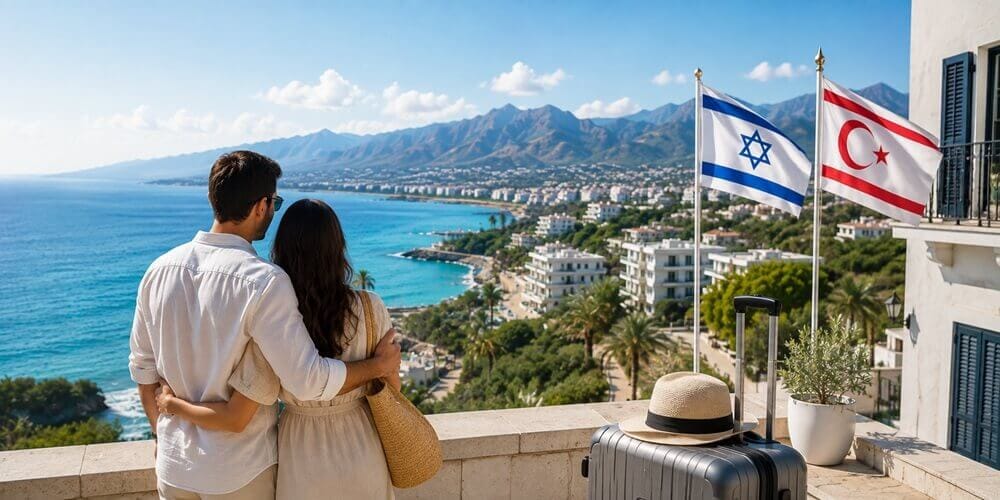
Relocating to the Turkish Republic of Northern Cyprus is an appealing option for many Israelis who seek a better quality of life defined by a drier climate, lower cost of living, improved personal safety, closer financial and familial ties to a parent nation, and the opportunity to operate freely in a more familiar political system. Primary attraction points include the comparatively reasonable cost of housing, low and steadily declining property taxes, little or no actual tax on foreign income or pensions, and relative political and economic stability. Also considered are the establishment of an Israeli-relevant education system and liberal yet close-knit society, together with reasonably good healthcare provision and an expanding range of local services.
Political and socio-cultural factors are important considerations that often emerge from expectations of a significantly lower crime level and the comforts of a familiar culture and language. Financial and tax benefits may be important for some retirees, but they rarely appear to be a prime motivator when moving to the TRNC. Cyprus offers no obvious advantages for young or middle-aged Israelis seeking a better standard of living than that available at home, a lower cost of living with a similar standard of support services, or an accessible year-round warmer climate. Such conditions would apply whether seeking to settle or retire in Southern or Northern Cyprus.
Three primary features draw Israelis to Northern Cyprus: the climate, which enables outdoor living nearly all year; the relatively low cost of living, from rent through foodstuffs and holidays; and a sense of security, echoed by everyone. Economic opportunities (a financial ecosystem that encourages international business, tourism, hosting of education institutions, agriculture and renewable energy), recreational education within criminally cheap universities that welcome and serve every outsider, affordable healthcare of high quality, pleasant cruisers with the additional touring option of a non-internationalized neighbouring stable ally, plus a Turkish language, history and heritage strongly attached; the support of the Turkish-speaking world for Turkey; and many connections back to Israel and an atmosphere that in normal times welcomes Jewish visitors; are attractive. Yet the fact that Northern Cyprus constitutes a non-recognized area under Turkish control who, since the Turkish independence, has adopted an extremely open Northern Cyprus immigration for Israelis policy, welcoming basically anyone from any country as long as no residency restriction applies against zoning and land ownership, and therefore allowing basically anyone to receive residency citizenship or permanent residency citizenship after 12 months and in practice everyone after 5 years, plus that it is cheap to learn Turkish, allow without major concern the overcoming of the initial political and social layered language barrier.
The presence of a Turkish Cypriot versus an international culture emphasises Islam and Turkish influences, and context for those who feel that the hostile relationship of Islam with Judaism has for some unexplained reason generally changed during recent human history; for those who from afar closely pay attention to world news; and possibly also for those who dare to establish experimental contact and research friendship as first level of human instinct. Nevertheless, this Turkish atmosphere still point out the difficulties encountered by applicants applying for citizenship, ownership or residency in Israel when making their applications and possible approaches, as it is still a completely different country with a mostly opposite cultural life, education and economic life; and therefore such difficulties must be considered before making the big move change or the move happens to achieve a long-term expansion.
A broad range of visa options are open to Israelis wishing to live abroad, and Northern Cyprus is no exception. Interests in relocating to Northern Cyprus include, but are by no means limited to, attractive weather, safety, speaking English, low crime, a cheap cost of living, minimal bureaucracy, and proximity to Israel. Most Israelis exploring Northern Cyprus immigration for Israelis open to them, however, seek residence in Northern Cyprus, at least in the short term.
Like many other countries and territories, Turkish Republic of Northern Cyprus (TRNC) grants some residency cards automatically. For others, residency is either not granted straight away, or depends on providing various documents, all of which require time and effort to gather. For any Israelis thinking of moving to Northern Cyprus, especially those planning to settle there permanently, understanding the needs of obtaining a residency card in the TRNC is essential.
Exploring Migration Possibilities for Israelis
Israeli citizens seeking to settle permanently in Northern Cyprus often explore the diverse options for obtaining a visa. Numerous routes to a visa exist. Interest, whether from individuals or companies, often revolves around investment opportunities in Northern Cyprus. The recognition of local law remains consistent in all inquiries: while Revocable Residency allows Israelis to operate businesses and travel without a visa, it does not permit property purchase. Inquiries about relocating with a university education often focus on Study or Research Residence permits. Several students express an interest in exploring business opportunities after completing their studies.
The understanding that Study or Revocable Residency permits do not allow property purchase or Indefinite Leave to Remain often influences student choices. Students may later choose to apply for Touristic, Traded, or Work permits, each with its particular criteria. Other employees obtaining a Work permit might require a Work permit for other nationalities. Research Residency permits remain available for those researching specific areas.
The Northern Cyprus Road is usually based on the acquisition or construction of property in Northern Cyprus. Under local law, property owners in Northern Cyprus who are not citizens of TRNC may apply for a residency permit – the residence is granted by the Council of Ministers, with the requirement that the property purchase agreement is registered in the land registry. The residence permit is initially granted for one year and may be renewed annually for up to 5 years. Applications with no problems can be processed in a few weeks. In practice, Israelis face many challenges in property acquisition, both in obtaining the property and in maintaining the residency permit.
In addition to property acquisition, the study progress of the partner’s children is also a frequent reason why Israelis apply for residency in Northern Cyprus. Students enrolled in a university in Northern Cyprus receive a student visa for the period of their studies and may apply for a residence permit for the period of their studies until the age of 27. In the context of family reunification, residence permits are also granted to families of students. Those with a residence permit in Northern Cyprus for 5 years can apply for permanent resident status, which allows travel to Turkey without a visa.
To apply for permanent residence in Northern Cyprus, individuals must prepare a dossier, which should include a valid passport, medical checkup approval, police clearance certificate, bank confirmation of sufficient funds, proof of accommodation, and evidence of health insurance. The medical examination must show that the applicant is free of diseases, and the police clearance must be from the home country or the country of residence for more than one year. Foreigners must offer proof of registration, such as a work permit, student permit, or tourist residence permit, at the time of application.
Usually, the application can be submitted while living in Northern Cyprus for Israelis as students, full-time workers, or on 90-day tourist residence permits for a processing fee in local currency. Permanent residency is granted if authorities are convinced that the applicant will not become a burden to the state—an ambiguous term that could potentially hinder the issuance of and thus the ability to secure property for Israelis in the TRNC.
An application for Permanent Residence (“PR”) demands several supporting documents. An empty list may be punctuated by the signature of the Chairman of the Council of Ministers or Minister of the Ministry of the Interior. A Sample Application Form for an Application form is appended (Afsbd-Form-01). A Application Form for Permanent Residence-Application for non-Cypriot TRNC citizen is available (“Cypriots Residences”). The Permanent Residence Application Form for Cypriots from the Republic of Cyprus is an additional item, as is the Application Form for Temporary Residence-Work Permit for Non-Cypriot Citizens of Turkish Nationality (Afsbd-Form-04).
The text Maliye Bakanlığı BİLGİ NOTU on the Northern Cyprus Finance Ministry’s website lists documents required for the application: a bank statement, an insurance policy, a clean criminal record check from Turkey, the Turkish Republic of Northern Cyprus, and the country of residence, plus purchase contracts or leases for residence and shops together with court approvals if necessary. A Health Report (TRNC Health Report Form), confirmation of deposit in a designated bank, and confirmation of monthly income are also among the listed requirements. An official letter from a public institution charging the Ministry with taking the action required may also be necessary. A minimum passport validity of at least eight months at the date of entering into the Turkish Republic of Northern Cyprus is necessary.
Formalities might be completed within days, but the process takes far longer. Applications for permanent residency in Cyprus must be submitted to the Ministry of the Interior in North Cyprus. Once submitted, the Ministry forwards them to the Council of Ministers for approval. The Council considers locations of new residence, political circumstances, the opinion of the “Foreign Ministry” regarding citizens of other countries, validity of health insurance, and whether the property has been taken over by the Turkish Republic of Northern Cyprus government.
The Council interprets the rules. Issued regulations state that work permits cannot be obtained. As a rule, the opinion of the so-called “Foreign Ministry” is followed. The “Immigrant Department” has declared that requests for residence permits can only be approved if the foreigner’s country does not have formal relations with the TRNC. The Ministry has approved the applications of inhabitants of an enemy state only when they founded new service- and supply-oriented businesses. A time limit for issuance of permanent residency permits was set in 2017.

Despite being able to reside in Northern Cyprus, Israeli nationals still face challenges. Turkish law prohibits them from owning property in the TRNC, and local law does not recognize residential permits given to Israelis, meaning they can even be expelled from Northern Cyprus without any justification. While direct flights between the TRNC and Israel generate social and economic activity, many Israelis remain wary of a move. Beyond the legal complications, practical issues also play a role in this hesitance.
Apart from property ownership, other economic conditions may also affect potential relocation. Practical matters such as the quality of the healthcare system, opportunities for work and/or studying in Northern Cyprus, security, and travel distance to Israel can also influence one’s choice to integrate into the local tourist environment or relocate to Northern Cyprus permanently. Adapting to a different culture and language could prove challenging for some, particularly as Turkish is the official language and Turkish Cypriots seldom speak Hebrew. Although some Israeli nationals are beginning to form closer ties with Turkish Cypriots in business, education, and tourism, it will take further time and mutual engagement for these developments to flourish.
Property ownership in Northern Cyprus is restricted for Israeli nationals: they cannot buy property directly but must instead rent. Such arrangements may also extend to secondary and tertiary residency, reflecting the Turkish perspective on Israeli nationals, whether permanent residents, long-term visitors, or foreign property owners or renters. All these categories may have to renew their visas regularly, even if they stay for only part of the year.
While most Israeli nationals driving in or staying as tourists experience their visit as safe and pleasant, beyond road signs and other information, the language barrier quickly becomes apparent. Socially and economically, any stay longer than a few months tends to require some degree of Turkish or Turkish Cypriot, even if only at the level of asking directions or ordering a meal.
Local law influences property ownership and residency.
It is important to note that Israelis cannot legally buy property in Northern Cyprus – in accordance with Turkish law, they are treated similarly to Greeks or Greek Cypriots. Nevertheless, this does not prevent Israeli groups from investing or operating in the TRNC. For Israelis who wish to remain permanently, the best exit option is to apply for Economic Refugee status: if approved, applications can then be made to “keep the status” with the government after the first five years. Israelis hold institutions like banks, hotels, and shops; service consumption is much higher than for the rest of the population. Furthermore, these businesses and services depend heavily on the Israeli economy and are relatively cheap.
On an everyday basis, there are some socio-economic difficulties for whoever arrives from Israel. Most people do not speak Hebrew and therefore a good level of English is advisable. Adapting to not having sheruts (shared taxis with a fixed price appearing every few minutes) or a good public transport system takes a while. All of the above influence the level of interest in living there, especially the fact that once settled, most residents wish to return to their home country, boosting home-airfare prices before holidays.
Indigenous communities in Northern Cyprus are growing ever more comfortable with their Israeli cousins, and activities aimed specifically at the Israeli community are becoming increasingly visible. For example, as well-supported schools, grocery stores, and community organizations are popping up, Israelis who spend only part of the year in Northern Cyprus have weathered the challenges of maintaining relationships back home and continue to seek constructive ways to hold on to home. Recognizing the impossibility of guaranteeing that they will still be welcome in the years ahead, the prospect of relocating permanently remains an intriguing question for many.
Whether considering Northern Cyprus as a permanent home or merely looking for the best place for a long holiday, Israelis have a range of options for both private and group activities, services, and products. For now, the local Turkish-language press does include periodic features about it, and kosher restaurants serving good Israeli dishes and expanding their offerings are on the way.
A local Who’s Who, weekly gatherings, and a chabad house enable living in Northern Cyprus for Israelis to connect, receive support, and celebrate together. Former IDF Colonel Beni Gogan leads the group relocations. An innovative creative events project brings solo travelers together. For those wanting to feast on a holiday but without family nearby, the kosher meal or even a full kosher family dinner series offered during the High Holydays by Luri, Chaim and Igor in Arbel are a popular call. Community life ebbs and flows, depending on sudden events like the Flag parade in Jerusalem or Exposure Day at the Kotel. Tel Aviv, Moscow, London, all these places offer Visibility to integrate Holi together, to breathe together in the bustling atmosphere, or simply to have fun. A visit by an avalanche of North Americans during the summer and of South Americans during the winter shows that the strength of the Jewish diaspora is expressed well in discovering new lands, but also in the warmth felt in these small moments that are lived outside her home but among those who are family.
A community of Israelis is establishing itself in Northern Cyprus, synthesizing local culture with elements from Israel. A dedicated Hebrew-speaking private school serves children of expats and local families, while several businesses cater to Hebrew-speaking customers. Northern Cyprus has become a favorite vacation spot for Jerusalem residents due to its proximity, affordable prices, and easy access from Ben Gurion airport. The emergence of a vibrant Israeli community in Northern Cyprus is facilitating trips for Israelis who wish to visit the Turkish Republic but prefer to avoid Turkish-speaking destinations. For those seeking a longer stay, the quiet island is beginning to attract interest in Northern Cyprus residency for Israelis.
Isolated in Northern Cyprus, far from community activities, tight family ties, and friendships built over years, those who left must bear the burden of their own choice: discovering a new and different way of life in an unknown land that does not speak their own language. Parents must shoulder the responsibility of providing their children with holiday experiences in Israel, even if the family does not succeed in every venture.
The Northern Cyprus residency for Israelis wishing to relocate to Northern Cyprus exert a major influence on their longer-term plans. Too often, these plans revolve around obtaining a permanent residence permit, yet, the requirements for Israeli citizens differ from those applying from other countries. Under TRNC law, foreign nationals with residence permits automatically become eligible for temporary leave to Israel. However, foreign nationals holding a residence permit from the Republic of Cyprus who plan to visit the TRNC for tourism are not eligible for a visa. Hence, when considering longer-term residence in Northern Cyprus, Israeli applicants may wish to change their residence status abroad frequently.
Such considerations focus on step two of the investment route and should be weighed when making an application. If relocation plans ultimately centre around the benefits of permanent residence, it is prudent to apply as early as possible in the process. Permanent residence applications require original documents with the official translations in Turkish, and multiple sets of copies. Such applications are generally approved two years after submission. An additional point of concern is that possession of a residence permit issued by the Republic of Cyprus may invalidate a permanent residence permit application in the TRNC. Applying for a permanent residence permit in the Republic of Cyprus before the TRNC, therefore, risks jeopardising the transfer to Israel.
The local situation drives the majority of Israelis currently considering a move to Northern Cyprus; visa and residency status appear subordinate. Nevertheless, these factors will impact mobility. Most train their sights on permanent Northern Cyprus residency for Israelis, or at least on long-term residence in a First World country closer to home. Holders of the North Cyprus equivalent of a Schengen visa can remain for an extended period, while permanent residents will be eligible for Turkish citizenship in the future should they wish.
Having permanent residence and citizenship would also make travel to Turkey considerably easier, with permanent residents no longer required to obtain visas. Turkey’s entry into the European Union could enable Turkish citizens to travel to Europe without a visa, and moving freely between Northern Cyprus, Turkey, and Israel seems very attractive. Thus, establishing residency in Northern Cyprus brings with it benefits in all directions – towards Israel, Turkey, and indirectly Europe. For the time being, economic considerations, together with the wish to flee the tense security situation in Israel, are uppermost, and residency is viewed as a means to that end.
Relocating to Northern Cyprus is a relatively straightforward process for Israelis, with no hardship visas required, a variety of simple Northern Cyprus residency for Israelis options available, and a community of somewhat longer term residents already on hand to ease the transition. Even if permanent residence seems out of reach, for now, staying for a few years while still in possession of an Israeli passport may be the best plan, as doing so usually preserves the right to return to Israel with little fuss or delay, and maintains a valuable long-term option to grant a child a new passport. On the downside, however, residency does not imply property rights in practice, and much of the existing housing stock is priced deliberately high to deter long stays in the first place. Nevertheless, continuing to make the most of the relatively close proximity, low cost, and decent weather while also keeping an eye on future developments remains a viable strategy for now.
Advice from a legal point of view is rather different. Israeli applicants for permanent residence and naturalization following permanent residence are subject to greater scrutiny than other non-North Cypriots. In addition to travel documents and police reports, the authorities require confirmation of admission to an English-language school if under age 18, evidence of independent means of support which do not promote the North Cypriot economy and which are sufficient even without a Turkish Cypriot communal council for at least the first five years of permanent residence, a work permit or an export variety for the first five years, and a clean criminal record, regardless of country of issue. Getting it right first time is therefore essential, as misjudgments either way can result in months of delay and sometimes denial.
Explore why Israeli buyers are investing in Northern Cyprus real estate, from competitive prices to long-term opportunities.

From Long Beach to modern residential projects, discover the advantages that make İskele one of the world’s most attractive coastal regions.

Learn the 10 strategic advantages of investing in real estate in Northern Cyprus. High rental yields and investment opportunities.
Hello!
