


Learn whether Israeli citizens can buy property in Northern Cyprus and understand the legal process, requirements, and key steps.
Home » Northern Cyprus Investment Opportunities for Israelis
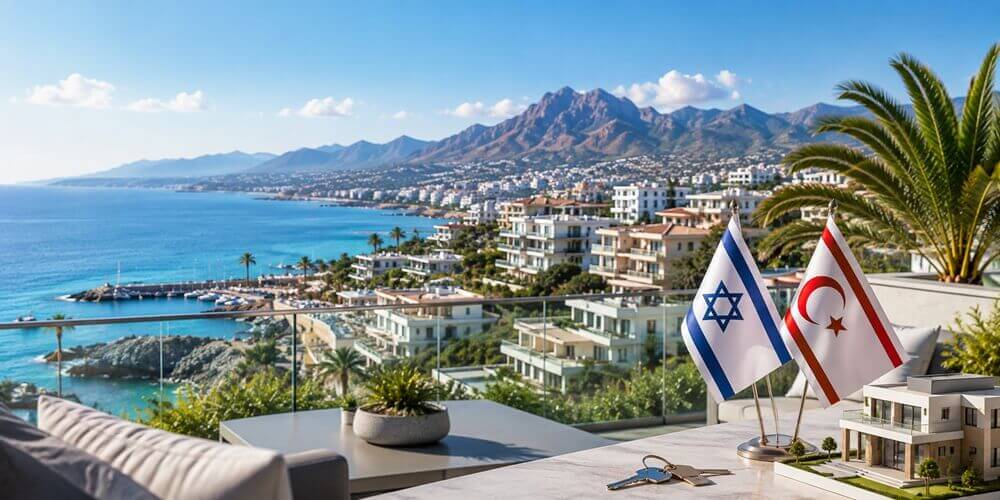
Investment interest in Northern Cyprus for Israeli buyers is fueled by a combination of historical, economic, and policy factors. Diplomatic relations with Turkish Cyprus, formalized in the 1980s, generate positive perceptions and support stability. Turkish citizenship is possible after investing more than $400,000 on the island, while friendly regulations create a profitable environment for venture capital in private equity and real estate funds.
Despite the absence of formal diplomatic relations with the Turkish Republic of Northern Cyprus, the underground nature of the transactions and a similar culture reduce the investment risk. Activities that break the unwritten rules of investment are punished, and Turkey is generally a welcoming country for Israelis, while the Turkish interest in improving tourism and economic relations with Israel is evident. Investments in the property market in Northern Cyprus have a draw because no taxes are paid for real estate investors, and the returns can reach 8% to 12% or more, especially for high-risk business partner pools. Local venture capitalists try to attract investment in housing for young families, hotel construction, and the opening of entertainment complexes.
The long-term outlook for Northern Cyprus appears optimistic, but caution is still warranted. A new wave of global finance or the emergence of new economic bastions may shake demand, although the local population is not able to realize increased demand to the same extent as professional real estate funds in other EU countries. However, these investments are also in the top risk category because the island economy is not able to absorb increasing prices.
Historical ties, economic stability, and incentives attract Israeli funds to Northern Cyprus. The capacity to undertake projects without hindrance, to operate freely without restriction on goods and services, and especially the absence of a language barrier also represent advantages. Furthermore, the lack of diplomatic relations may actually constitute an investment opportunity: if the Turkish lira depreciates excessively, capital attacks may develop that spur inflation, yet non-residents in the Turkish-speaking and geographically close TRNC are not restricted by the Central Bank.
In this environment, best property investment in Northern Cyprus has become the most relevant development in terms of volume. Despite the existing problems of title, prices and yields, many Israelis have acquired properties on the island—yet these are not trading as prices fell sharply after 2005. Now the market appears to be turning, as became evident in 2010 when the number of transactions increased and the number of high-rise tourist projects moving into the pre-sale stage burgeoned. The market appears to have bottomed out. One area of renewed activity is leisure real estate aimed at the rental market—speculative purchases that may be yielding results.
Government support in all government and economic sectors in the country also encourages investors to enter the country, including Northern Cyprus, as they benefit from favorable taxation; profits can be fully repatriated at any time, and borrowings from abroad are not limited. In addition, most economic activities allow for 100% foreign investment. Ease of doing business in Northern Cyprus and its proximity to Israel offer investors a low risk for their capital. Many Israeli companies have started investing in Northern Cyprus in the following areas: Finance, Construction–real estate, Tourism, Trading, Transportation.
Markets in Northern Cyprus attract Israeli investments due to their stability and the absence of armed conflicts, support from foreign governments, banks, and insurance companies. Turkish banks cope successfully even in crises such as depreciation, de-functioning, and devaluation of the Turkish currency. Support comes from the Republic of Turkey both through financial levers such as exemption and through direct demand. Indeed, during the last armed conflict with Israel, all Israeli companies and businessmen were covered by the insurance firms of the Turkish Republic. Northern Cyprus, whose foreign policy is based on full support for Israel, therefore constitutes a low-risk area for Israeli investments.
Price levels and rental yields in Northern Cyprus appear attractive to many Israeli buyers. Prices vary widely, but some districts remain affordable. A long-standing glutted rental supply pool has now begun absorbing. Despite a weak regional economy, tourism demand is reviving. Periods of strong rental demand will likely return.
Northern Cyprus property prices entered a falling cycle in 2011 with the collapse of the Russian economy and collapse of the Turkish economy. Since 2016, a healing process commenced, reflected in a steady absorption of the long rental supply glut. The rental market is now posting stability and some upward pressure is evident. A Cyprus-wide tourism boom should also benefit North Cyprus. The increasing number of incoming Israeli flights suggests increased interest by Israelis in visiting North Cyprus. Recent rental recovery aligns with earlier peaks, suggesting potential for further reversion. It is cyclical.
Demand is likely to fall again as income from Turkey sputters, but with a lesser relative impact than before. The prospects remain open for continued longer-term upward pressure on prices as generations give up on property in Southern Cyprus and search for more affordable options North. New developments and incoming Turkish government investment should help maintain the absorption momentum, supporting a long-term recovery.
Price levels differ from those of Israel, with both higher and lower values found. Rental yields of 7-8% in the short-term holiday rental market attract interest, while ongoing oversupply develops in the long-term rental market. The Northern Cyprus real estate market historically has experienced upswings and downturns every 10-12 years, with absorption presently at a low point. However, changing travel dynamics are fostering recent demand, with Israelis accounting for 70% of sales to buyers from outside Turkey.
Israeli investment activity in Northern Cyprus is at a low point, reflective of cyclical market conditions and broader economic factors. Interest from buyers in the Turkish market has fallen sharply amid the depreciation of the Turkish lira. The current absence of significant domestic or foreign tourism is weighing heavily on the economy, evidenced by rising unemployment and increasing business failures. Consumer sentiment remains depressed, in part due to the effects of two recent earthquakes in southeast Turkey and northern Syria. Nevertheless, a strong demographic and investment trend is supporting recovering demand in the holiday market segment. A significant influx of skilled workers is anticipated as the Turkish economy pivots from catering predominantly to low-income, seasonal, unskilled labor toward the establishment of specialized manufacturing sectors and heavy industry.
Several underlying parameters affect how the property purchase process unfolds for Israeli buyers. The seasonality of the local tourist market creates clear periods for buying interest, setting average absorption rates across market cycles. Typically, interest and price growth in the Northern Cyprus property market are muted, with any increases in demand typically peaking over the summer months. Price increases have occurred since the Covid-19 pandemic, driven principally by a recovery in demand from both local Cypriots and international buyers. The recovery may be turning cyclical as an increasing global focus on energy security stimulates demand for cycling, letting, and second homes for those in the energy-related sectors. Economic buoyancy has now stimulated construction in other product categories and districts, driven by strong demand for Airbnb properties.
Demand for properties is growing, driven by historically low levels of interest rates, record-high inflation rates boosting the desire for inflation-hedged investments, and the continuing effects of the Covid-19 pandemic. An influx of tourists during 2022 and tourism-related consumption businesses recovering strongly from the pandemic’s effect has encouraged a sharp rise in confidence. The hotel sector has reported the highest levels of turnover since the Covid-19 pandemic began, and forecasts suggest 2023 will be a stellar year for tourism, construction, and general economic activity.

Investors seek returns in line with their risk appetite. With stocks at high prices relative to earnings, bonds yielding normal returns on lower-rated issuers, and an equity risk premium that appears low, Northern Cyprus is often seen as a viable option for higher returns on best property investment in Northern Cyprus, especially given proximity. Although most Northern Cyprus properties do not provide attractive rental yields, losses in other markets can be offset by buying in a property-style investment, given the market’s geography and seasonality.
Compared to Northern Cyprus, near-shore financial centers abroad bear additional risks for Israelis, including bank credit risk, lack of government supervision, difficulties in recovering capital after trouble, and relocation difficulties. Israelis investing in properties close to the sea appear most likely to enjoy an appreciation in real terms, although this has yet to be confirmed statistically. Investment in Northern Cyprus demands a thorough analysis of legal and political status, selected due diligence, back-to-back financing for properties at the construction stage, and the screening of information sources. It is also preferable to work with an Israeli agent or a competent partner from Turkey or Northern Cyprus.
Three legal steps enhance the execution of Northern Cyprus investment opportunities: verifying legality, considering an LLC, and obtaining tax advice.
Conduct a legal verification of the potential purchase. Before signing a contract, verify that the developer or seller is legally entitled to offer property for sale. Several properties in Northern Cyprus are subject to more than one sale agreement, especially those on a Turkish title deed. Many others are on a Greek Cypriot title deed, which raises questions over the legality of purchasing these properties. Hire a local solicitor or law firm with a solid reputation and good local knowledge to address such issues before commencing the investment process.
Consider establishing an LLC — a limited liability company — to hold the investments. An LLC can improve asset protection, enable greater control of the cash flow, and simplify the tax situation. Forming an LLC in Northern Cyprus is straightforward and cheap, and can be done by your local solicitor. Engaging a local tax advisor with suitable qualifications and knowledge in real estate investment can provide greater tax efficiency in the purchasing process, especially if investments are structured through an LLC.
While Northern Cyprus has attractive investment features and its territory can be subdivided without concern for the subsequent allocation of taxes, tax misallocation can easily arise at the overall investment level. Existing tax treaties between the investing and receiving countries may require Israeli investors to apply to the respective tax authorities for a remark of such properties in the Rent Tax Law during their annual income tax returns. To simplify procedures, it is preferable that the Israeli-Cypriot tax treaty be amended to cover income from the area of the Republic de facto controlled by Turkey. This would eliminate the risk of kidding with the combination of separate and independent tax treaties. Should such possibility be excluded from consideration, the consideration given by the tax treaties to income from real estate and the register of income-producing land should be carefully considered in the overall investment decision.
In general, the attitude of the Turkish Republic and the Turkish Republic of Northern Cyprus toward investments by Israeli citizens is positively inclined, and consequently the approvals for investments by Israeli citizens are given relatively easily and in a short period of time. The interest in investing by Israeli citizens in these areas is, of course, even greater because of the double tax treaty that was signed between the two states in 1996. The Turkish Republic of Northern Cyprus is not recognized as a state by many countries, including Israel and Turkey. Therefore, investments in this area can be problematic and risky in relation to various aspects. Nevertheless, a possible investment in this area must examine these problems and the risks in any case, since every investment may involve risks.
Underlying factors signal future price growth, market absorption, and relatively secure minimum prices for Israelis investing in Northern Cyprus. The Dherinia-Larnaka area is expected to experience yield increases due to tourism pressure. However, legal, currency, and regulatory risks are present and should be addressed through appropriate investors’ risk management steps.
Best Performing Districts for Northern Cyprus Real Estate Investment for Israelis: Three forward indicators suggest an optimistic view of the property market for Israelis looking to invest in Northern Cyprus. A rapid expansion in the number of Northern Cyprus acquired by Turkish citizens indicates an improving business climate and regulatory conditions, negatively correlated with property risk perception. Second, rising local demand in the Famagusta district triggered price increases, and investment interest flows from the Famagusta area toward the nearby economy Dherinia-Larnaka area, a further sign of market maturation. Third, an increase in arrivals at the Turkish Republic of Northern Cyprus follows the existing patterns of a cyclical tourism recovery, and Israelis investing in Northern Cyprus, positioned in the Famagusta area, remain best placed to benefit in the near term. The demand for new tourism properties and the expected income are supported by a rapid accumulation of properties in Paphos and Ayia Napa by Russians and Ukrainians.
The district-based approach used in this analysis of Northern Cyprus investment opportunities for Israelis indicates that Iskele, Guzelyurt, and Lefke warrant special attention. In all three districts, various factors indicate strong potential for the next economic cycle. Iskele has the highest absorption rate, which is expected to continuously draw demand; Guzelyurt offers a development-friendly environment; and Lefke has been a long-term focus of industrial development. Two other districts are also singled out for their potential. Although Kyrenia and Famagusta borders do not currently appear strongly promising, they remain highly attractive on a long-term horizon.
As in many other newly opened markets, investors and buyers are generally advised to consider the factors driving high returns for early movers. The relaxation of capital controls stands out as one candidate. Hyperinflation and a weakening currency have become sources of risk, especially in the tourism sector, but they go hand in hand with opportunities for the forex-hedged real estate investor. Finally, property prices are just starting to show signs of bottoming out after years of decline: they remain low on an absolute basis and relative to other tourist regions.
The Northern Cyprus property market is considered high risk, but many common Northern Cyprus property investment risks can be managed. Legal and ownership risks are particularly significant, mainly due to the Turkish-Russian loan to the economy, which affects currency value against the Dollar. Currency risk should be mitigated by holding investments in hard currencies by moving rental income abroad as required, and owning freehold properties. The risk of properties losing value can be minimized by focusing on prime districts, buying within a market with future expansion potential, and the potential for long-term political resolution of the long-term Cyprus problem. Non-European Union ownership of property should however, be fully vetted. Getting professional assistance from professional local lawyers and acting on their advice can mitigate many potential problems. Exercise of due diligence is strongly encouraged.
Despite such factors, the rental yield returns in foreign currency, short ownership period, non-residency requirements, and property ownership for all can make investment enticing, especially with prices at historical low levels against in real terms, especially on new Cyprus-based developments. Low prices relative to other Mediterranean destinations, with full property rights, issued titles for both Turks and foreigners, and building ownership predicated on residence permission, also contribute to investment potential. Also, any price appreciation will partly reflect the assimilation of the Turkish-Cypriot economy closer in harmonization to that of Turkey.
The purchase of property in Northern Cyprus involves eight distinct stages: inquiry, pre-agreement, financing (if required), legal due diligence, contract signing, property transfer, renovation or building, and handover of the completed property. Each stage is considered below, with an emphasis on the experience of an Israeli buyer.
The buyer or his/her advisor will usually initiate contact with a property agent or developer, either directly or via email. First inquiry discussions mainly cover subjects such as the buyer’s requirements, the range of property prices and specifications in the market, and the procedures entailed in buying a property in Northern Cyprus. There is rarely any mention of price negotiations at this stage. During the inquiry process, the buyer will probably also look at other developers’ offerings in order to make comparisons. When a satisfactory property is found, the agent or developer would be asked to hold the property for a specified period pending further investigation. The property is usually removed from the market, and the timescale for this can vary from a few hours to a few days or weeks. During this period, an independent lawyer—usually acting on behalf of the buyer—should carry out the relevant due diligence in order to cover the next stage, pre-agreement.
First-time buyers in Northern Cyprus should proceed with care. During an initial inquiry, the buyer’s identity should be verified, and their immediate requirements and site visit preferences discussed. During a site visit, properties that fit the buyer’s requirements should be shown in their order of desirability, with the location, general condition and the developer’s track record highlighted. If the buyer is ready to proceed after the visit, they should analyse the property carefully and carry out the necessary due diligence, including a check with the developer’s lawyer, before committing to buy. Due diligence will establish the lawful ownership of the property, that full rights of future ownership can be transferred to the buyer and that taxes, dues and planning permission are all in order.
If needed, an application for a loan from a Northern Cyprus bank should be made well in advance of any proposed purchase. Having found a suitable property, the buyer should appoint a lawyer experienced in such matters to represent them, in English. This will be vital during the purchasing process to make inquiries and checks, especially regarding contracted sales or option agreements with the developer and ensuring that no debts are in place. In addition to payment, the buyer must remit the necessary taxes within 30 days, then present proof to the Ministry of Interior. Following this and briefings at other ministries, the land registry will normally grant permission within three to six months. The purchase then proceeds as in Turkey, via the appropriate land department.
In the medium to long term, future investment opportunities in Northern Cyprus for Israelis should be shaped by demographic forecasts, expected tourism trends, and a burgeoning public infrastructure program, all of which are supporting increased demand in the Northern Cyprus real estate market. Indeed, Northern Cyprus is expected to see its resident population increase by approximately 50% by 2030 and over 60% by 2040. Following a period of rapid growth for tourism from mainland Turkey, sources indicate good future prospects for tourism from Europe and Eastern Europe as well, once geopolitical tensions ease. Public revenues from these trends are being used to enhance and expand transport and housing infrastructure in the Turkish Republic of Northern Cyprus, connecting supply more quickly with not only Turkish tourists but also international students, foreign expatriate workers, and the growing number of investors from the Middle East.
At the same time, ongoing diplomatic tensions between Turkey and Israel seem to have moderated, following the refurbishment of the station of Turkish-Israel relations. Consequently, possibilities of renewed highways and air connections between the two countries look likely to further support tourism from Israel to Northern Cyprus. These factors would appear to augur well for future investment opportunities in Northern Cyprus by Israeli investors. However, user noted that during the course of the visit, the broader property market had experienced weaker conditions, with significantly lower enquiry levels than during the previous peak. The reasons offered for this downturn are cyclical in nature and relate principally to an over-supply in certain segments of the Northern Cyprus property market catering for short-term rental income, together with the direct and indirect influence of events in nearby developed markets.
In conclusion, a wealth of facts and considerations suggest that Israelis would benefit from diversifying a portion of their investment portfolio through allocations to Northern Cyprus. Historical ties and current economic stability, combined with attractive capital gains and rental yields, make the Northern Cyprus property market of interest. Recent developments are now spurring renewed demand after a significant hiatus. Districts exhibiting strong supply-growth-demand imbalances are the ones to target. While common investment risks exist, these can be largely mitigated through clear-sighted due diligence. A simple and straightforward process, from inquiry through to closing, is available for first-time buyers. Such investment opportunities cannot be considered without weighing existing positions in alternative markets; however, it is clear that the case for Northern Cyprus is sufficiently attractive to warrant such scrutiny and consideration.
Looking more closely at the state of play, rental yields in TL have been running at c.6–7 per cent, delivered in a currency with a history of depreciation against both the euro and the dollar; asking prices in euro have remained broadly stable, while vacation and tourism arrivals and overall economic conditions have begun to improve. As property prices turn higher in most European holiday sub-markets, at least in euro terms, the renewed interest in Northern Cyprus, hitherto restrained by the failed 2004 Annan plan in a broader geo-political and geo-strategic context, is to be expected. Although long-term investment-horizon considerations suggest planning for exit strategies, the short-term activity of handing over rental management to local agents can deliver cash flows on newly purchased property that are meaningful in local currency terms.
Learn whether Israeli citizens can buy property in Northern Cyprus and understand the legal process, requirements, and key steps.

Northern Cyprus offers both living and investment opportunities. Natural beauty, tourism potential, and a peaceful island life all in one place.

Learn about the legal assurance, solid projects and high value increase that NorthernLand offers for safe real estate investment in Northern Cyprus.
Hello!
